A page about substance abuse, testing and custody in California

Please note: This page is legal information about California custody law. It is not medical, mental health or addiction-treatment advice. If you or someone you know is in crisis, call or text 988 to reach the 988 Suicide & Crisis Lifeline, available 24 hours a day. In an emergency, call 911.
The short answer
In a California custody case, the judge's focus is the child's health, safety and welfare. A parent's habitual or continual misuse of drugs or alcohol is one of the factors the court must consider, and the court can order drug and alcohol testing if it first finds habitual, frequent or continual use. A positive test does not by itself decide custody. What courts look at is the whole picture, including what a parent has done about the problem, and they have tools such as testing, supervised visitation, counseling orders and appointing a lawyer for the child to protect children while giving parents a path back to more time.
By Tristan teGroen, family law attorney, Newbury Park (Thousand Oaks), California. Updated November 22, 2026.
What the Court Considers
California's public policy is that the health, safety and welfare of children is the court's primary concern in any custody or visitation order. The law also favors frequent and continuing contact with both parents, except when that contact would not be in the child's best interest. When those two goals conflict, the order must protect the child's health, safety and welfare and the safety of all family members (Family Code section 3020).
In deciding the child's best interest, the court must consider, among any other relevant factors (Family Code section 3011(a)):
- The health, safety and welfare of the child.
- Any history of abuse.
- The nature and amount of contact with both parents.
- The habitual or continual illegal use of controlled substances, the habitual or continual abuse of alcohol, or the habitual or continual abuse of prescribed controlled substances by either parent (section 3011(a)(4)).
Two conditions come with the substance-use factor. First, before considering these allegations, the court may require independent corroboration, such as written reports from law enforcement agencies, courts, probation departments, social welfare agencies, medical facilities, rehabilitation facilities, or other public agencies or nonprofit organizations that provide drug and alcohol abuse services. Second, when allegations like these have been raised in the case and the court still gives that parent sole or joint custody or unsupervised visitation, the court must state its reasons, in writing or on the record, why the order is in the child's best interest and protects the safety of the parties and the child, and the order must be specific as to the time, day, place and manner of transfer of the child (section 3011(a)(5)).
Custody may be awarded to both parents jointly or to either parent according to the child's best interest, and the law gives the court and the family the widest discretion to choose a parenting plan that fits the child (Family Code section 3040). In practice, that means sobriety and stability are not all-or-nothing questions. The court can shape the parenting schedule around the risk it sees and the progress a parent shows.
Court-Ordered Drug and Alcohol Testing
Family Code section 3041.5 governs testing in custody and visitation cases (and in probate guardianships). Its key points:
- When testing can be ordered. The court may order a person seeking custody or visitation to be tested only if there is a judicial determination, based on a preponderance of the evidence, that there is habitual, frequent or continual illegal use of controlled substances, or habitual or continual abuse of alcohol, by that person. The evidence may include a conviction within the last five years for illegal use or possession of a controlled substance. Unlike section 3011, the testing statute does not separately mention abuse of prescribed controlled substances.
- Least intrusive method. The court must order the least intrusive method of testing. The statute does not list specific methods.
- Federal testing standards. Testing must follow the procedures and standards set by the U.S. Department of Health and Human Services for drug testing of federal employees.
- Right to challenge. The person tested has the right to a hearing, if requested, to challenge a positive result.
- A positive test is not the whole case. A positive result, even if challenged and upheld, does not by itself constitute grounds for an adverse custody decision. The court must weigh all relevant factors.
- Confidentiality. Results are confidential and kept as a sealed record in the court file. They may be released only to the court, the parties, their attorneys, the Judicial Council for an authorized study, and anyone the court authorizes by written order after notice to all parties. Anyone who breaches that confidentiality faces civil sanctions of up to $2,500.
- Limited use. The results may not be used for any other purpose, including any criminal, civil or administrative proceeding, other than helping the court decide the child's best interest and the content of the custody or visitation order.
- Who pays. The court may order either party, or both, to pay the cost of testing.
Options Courts Recognize
No single program is required in every case, and none guarantees a result. The steps below are the kinds of things parents commonly do and present to the court. This page does not recommend particular providers, and choosing a treatment approach is a decision for you and qualified health professionals. From a legal standpoint, what usually matters most is consistency and documentation.
- Twelve-step and peer-support meetings such as AA or NA, documented with attendance logs or sign-in sheets kept over time.
- Outpatient and intensive outpatient programs (IOP). Enrollment records, attendance and completion letters from the program can be offered as evidence. Records from rehabilitation facilities and nonprofit drug and alcohol programs are among the sources the Legislature listed for corroboration in section 3011(a)(4).
- Residential treatment, with admission and discharge documentation.
- Individual therapy. A therapist's involvement and progress letters can be relevant to how a parent is doing. Two legal cautions: a letter is an out-of-court statement, so the other side may object to it as hearsay (Evidence Code section 1200), which can mean the therapist needs to testify or the court may give the letter less weight; and therapy records and communications are generally confidential, so talk with your attorney before you disclose them. Separately, the court itself may order a parent, another party or the child to participate in outpatient counseling, including substance abuse services, for up to one year if it finds the dispute poses a substantial danger to the child's best interest and counseling is in the child's best interest (Family Code section 3190).
- Parenting classes and co-parenting classes, with certificates of completion.
- Supervised or step-up visitation plans. A step-up plan starts with supervised time and moves to longer or unsupervised time as conditions are met, such as clean tests over a set period or program completion. When substance-use allegations are in the case and the court gives that parent unsupervised time, the order must be specific as to time, day, place and manner of transfer (section 3011(a)(5)), so step-up terms should be written with the same specificity.
Supervised Visitation Standards
When the court orders supervised visitation, the provider must meet standards set by statute and by the Judicial Council (Family Code sections 3200 and 3200.5; California Rules of Court, Standard 5.20). A provider can be a nonprofessional (an unpaid person, such as a friend or relative) or a professional (anyone paid to supervise, including through a visitation center). Among other requirements, a professional provider must be at least 21, have no DUI conviction within the last five years, complete 24 hours of training that includes substance abuse issues, and be registered on TrustLine.
Under Standard 5.20, unless the court orders otherwise, the provider should keep all contact between the child and the visiting parent within sight and hearing, and should allow no visits or exchanges while the visiting party appears to be under the influence of alcohol or illegal drugs. Professional providers keep a written record of each visit, including any failure to follow the terms, and must produce a report if the court orders it or a party, a party's attorney or the child's attorney requests it. Those reports are limited to facts, observations and direct statements, not recommendations. Communications with a provider are not privileged.
Emotional Strain
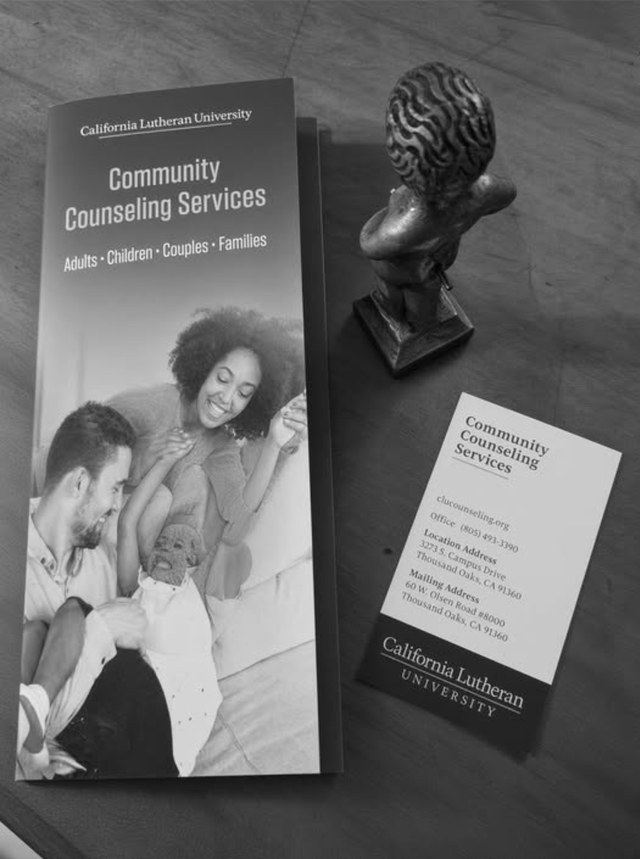
Tristan teGroen's clients have used the program and reported good results. One example only, not an endorsement; no result is guaranteed. The people pictured are models in the university's brochure. Photo by Tristan teGroen.
The end of a relationship is hard, and anxiety and depression are common during a separation and a custody dispute. One long-term Canadian population study, published in the journal Depression and Anxiety in 2009, found that people who were not depressed when the study began but became separated or divorced later had a higher rate of major depression than others (a hazard ratio of 1.3) (PubMed abstract).
Courts generally view getting help as a positive step, not a mark against a parent. The Legislature has pointed the same way: when a court finds that the effects of a parent's history of or current mental illness are a factor in the child's best interest, it must give that parent a list of local mental health treatment resources and state its reasons in writing or on the record (Family Code section 3040(d)). The court's primary concern still remains the child's health, safety and welfare. Whether and how to seek help is a personal decision; I can only speak to how the law treats it.
Minor's Counsel in High-Conflict Cases
If the court determines it would be in the child's best interest, it may appoint a private attorney to represent the child in a custody or visitation case (Family Code section 3150). The factors the court should consider include whether custody is highly contested or protracted, whether the child is under stress from the dispute, whether there are allegations of abuse or neglect, and whether one or both parents appear incapable of providing a stable, safe and secure environment (California Rules of Court, rule 5.240(a)). A party, a party's attorney, the child, a relative, a mediator or an evaluator, among others, may ask for the appointment, or the court may act on its own (rule 5.240(b)).
- Duties. Minor's counsel represents the child's best interest: gathering evidence, presenting admissible evidence, and presenting the child's wishes to the court if the child wants that. Counsel usually interviews the child, reviews the court file and relevant records, and may investigate further. Counsel has standing to seek relief for the child, access to the child's medical, mental health and school records, and may not be called as a witness (Family Code section 3151).
- Compensation. The court sets a reasonable fee, paid by the parties in the proportions the court finds just. If both parties together cannot pay all or part of it, the county pays that portion (Family Code section 3153). The court decides the parties' ability to pay, with a current Income and Expense Declaration (FL-150) or Financial Statement (Simplified) (FL-155) on file (rule 5.241).
- Qualifications. Appointed counsel must be an active member of the State Bar of California with professional liability insurance (or adequate self-insurance), at least 12 hours of initial training (covering topics including substance abuse, family violence and child development), 8 hours of training each year, and qualifying custody experience (rule 5.242).
Frequently Asked Questions
Can the other parent's drinking or drug use affect custody?
Yes, it can. In deciding a child's best interest, the court must consider the habitual or continual illegal use of controlled substances, habitual or continual abuse of alcohol, or habitual or continual abuse of prescribed controlled substances by either parent (Family Code section 3011(a)(4)). Before considering those allegations, the court may require independent corroboration, such as reports from law enforcement, courts, probation departments, medical facilities or rehabilitation facilities.
Can the court order me to take a drug or alcohol test?
Under Family Code section 3041.5, the court may order testing of a person seeking custody or visitation only if there is a judicial determination, based on a preponderance of the evidence, of habitual, frequent or continual illegal use of controlled substances or habitual or continual abuse of alcohol. The court must order the least intrusive method of testing.
Will one positive test cost me custody?
Not by itself. Section 3041.5 says a positive test result, even if challenged and upheld, does not by itself constitute grounds for an adverse custody decision. The person tested has the right to a hearing, if requested, to challenge a positive result, and the court must weigh all relevant factors in deciding the child's best interest.
Who can see my test results?
Court-ordered test results are confidential and kept as a sealed record in the court file. They may be released only to the court, the parties, their attorneys, and anyone the court authorizes by written order after notice to all parties. The results may be used only to help the court decide custody or visitation, not in any criminal, civil or administrative proceeding (Family Code section 3041.5).
Will getting treatment or therapy hurt my custody case?
Courts generally view getting help as a positive step, and the Family Code itself lets a court order counseling, including substance abuse services, in some custody disputes (Family Code section 3190). How treatment records or a therapist's letter are used in court raises evidence and privilege questions, so talk with your attorney before sharing them.
What is minor's counsel, and who pays?
Minor's counsel is a lawyer the court may appoint to represent a child's best interest in a custody or visitation case when the court finds it would be in the child's best interest (Family Code section 3150). The court sets a reasonable fee, which the parties pay in the proportions the court finds just; the county pays any portion the parties together cannot afford (Family Code section 3153).
What does a supervised visitation provider do?
A provider watches the visit or exchange and enforces the court's terms. Under the Judicial Council's Standard 5.20, unless the court orders otherwise, a provider should not allow a visit or exchange to occur while the visiting party appears to be under the influence of alcohol or illegal drugs. Professional providers keep records of each visit and must produce a report if the court orders it or a party or attorney requests one.
Getting Started
Your first consultation is free. You can book a time at calendly.com/tristantegroen, or call me at (805) 499-1900. My office is at 1000 Newbury Road, Suite 295, Newbury Park, CA 91320, and visits are by appointment only. See also my pages on custody of children, trials and which courthouse.
This page provides general legal information about California custody law. It is not legal, medical or mental health advice, and reading it does not create an attorney-client relationship. The law and court rules change, and every case depends on its facts. No particular result can be promised. Consult a licensed attorney about your situation, and qualified health professionals about your health. If you are in crisis, call or text 988.
 .